KEDA
KEDA scales workloads on events and external metrics, such as the length of a queue, in addition to CPU and memory. It can scale a workload to zero when there is no work and back up when work arrives.
 Free assessment
Workloads can scale on events as well as CPU and memory. Resource requests can be set from measured use, and pods that drift from their placement rules are moved.
KEDA scales workloads on events and external metrics, such as the length of a queue, in addition to CPU and memory. It can scale a workload to zero when there is no work and back up when work arrives.
The Vertical Pod Autoscaler measures the CPU and memory each workload actually uses and recommends resource requests that match. The platform runs it in recommendation mode, so it does not change running workloads.

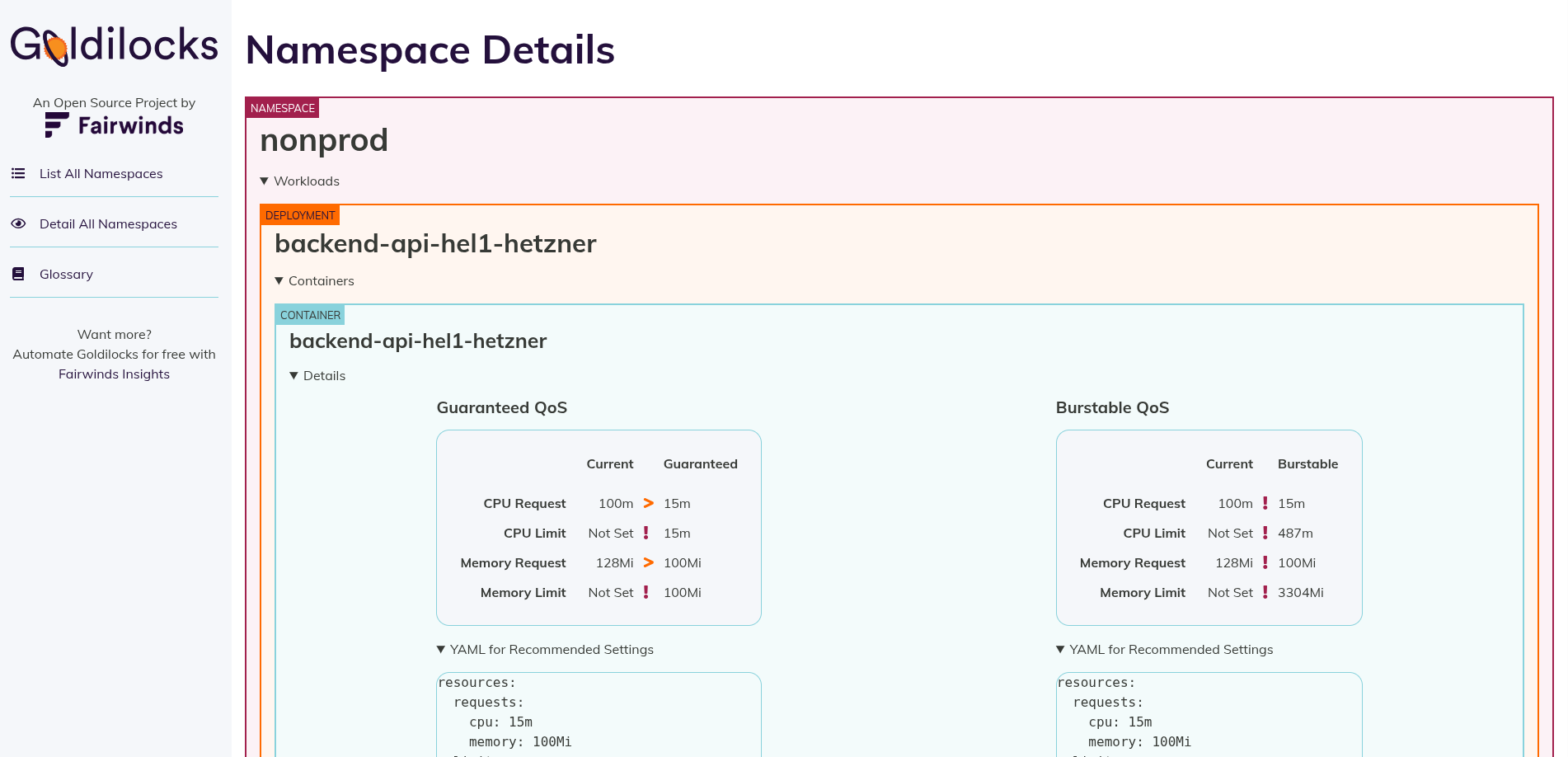
Goldilocks shows the Vertical Pod Autoscaler's recommendations on a dashboard, namespace by namespace, so teams can set resource requests from measured use.
The descheduler evicts pods that no longer meet their placement rules, such as node affinity, taints, anti-affinity and topology spread, and pods that keep restarting. The Kubernetes scheduler then places them again. It only evicts pods from workloads with at least two replicas.
GlueOps's own code is released under the Apache License 2.0. Each upstream project keeps its own license, shown in its section. Project names and logos belong to their owners and are shown only to identify each project. Their use does not mean that any project endorses GlueOps.
More of the platform
Questions about the platform?
Book a free assessment and we'll walk through how the platform would run your workloads.
Get a free assessment